
The first time I thought to myself, I wish I had been born a boy because they have it so much easier, I was seven years old. There’d been an argument with my grandmother about why the boys never had to participate in household chores – a small and trite remark about how that’s just what boys were like.
At seven, I was angry, and I didn’t understand why.
The first time I thought I started to understand the anger, with the help of an English teacher analysing the patriarchal structures in our assigned reading, I was fourteen years old. There were words I could now use to describe why grown men leered at my body in the same shorts my younger brother would wear. I was frustrated by the differences between girls and boys.
I would resent the boys for the better treatment they’d receive, and yet, I was starting to covet their attention. Jealousies started to form between lifelong friendships whenever I noticed my prettier friends become more popular, coupled with endless comparisons to the models on screen. I disavowed the colour pink because I wasn’t like them. I would stare at mirrors and pick on my skin, the hair on my legs, the scars on my face.
At fourteen, I was angry and insecure, and I barely understood why.
So at twenty-five, watching a movie about one of my most coveted childhood toys being hit with similar experiences, I felt seen. To some extent.
At least that fourteen-year-old version of myself felt seen.
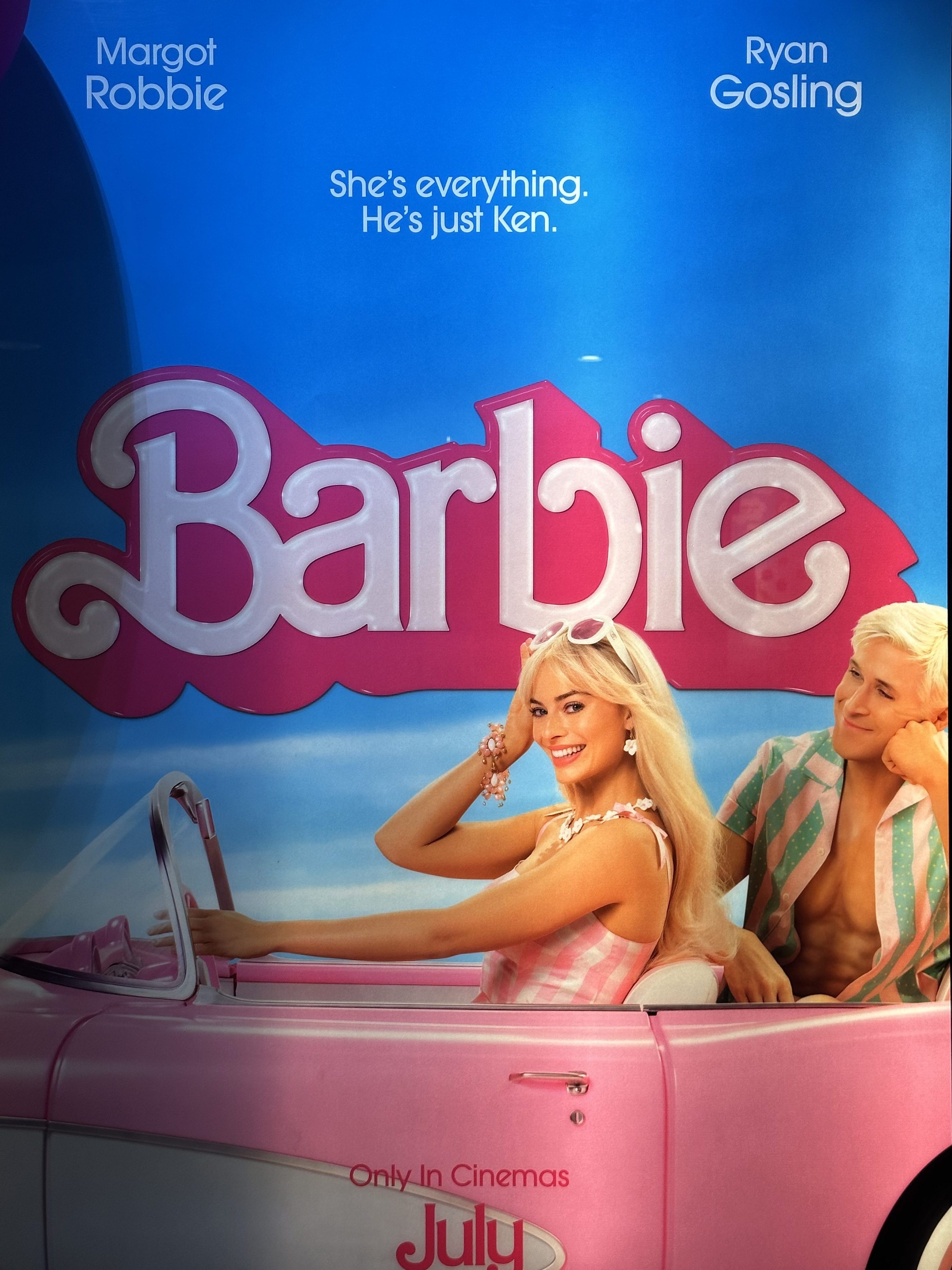
Don’t get me wrong – I enjoyed the Barbie movie. I loved seeing the different versions of Barbie, the wonderfully pink set of Barbieland, the gorgeous outfits Barbie wore, and the fun musical numbers. I laughed at the one-line zingers and cried when Barbie didn’t feel good enough for anything. Watching Barbie become conscious for the very first time to the struggles of girlhood and having similar experiences to my younger self was cathartic.
When Barbie is rollerskating through LA, being ogled and catcalled by men for the first time, I felt instinctively protective. I could picture myself at eleven years old, walking with my aunt and grandmother, as men hurled their objectified comments.
I appreciate that the film has resonated well with a wide number of young girls and even older women who are encountering feminism and the patriarchy in such an obvious manner for the first time. The scene when Barbie turns to the old woman at the bus stop to tell her she’s beautiful or hearing Barbie’s struggles with her own insecurities hit hard as I thought about the beautiful women in my own life. Maybe if I was fourteen again, I would have loved the movie even more.
At twenty-five, I’m indifferent to its anodyne feminist message.
From being denied equal rights and opportunities to the beauty standards women uphold themselves to, in the last decade I have become more conscious of how the patriarchy negatively impacts women, and even men.
There was so much potential from America Ferreira’s character, Gloria. The premise of the movie is that Barbie has to go to the real world because the ‘girl’ playing with her is unhappy and feeling everything she’s beginning to experience. I wish there had been more empowerment for Gloria. It got lost in her soliloquies, about how exhausting it is to be a woman and how we can never measure up to all of society’s expectations.
Gloria is the one feeling the weight of all these experiences long before Barbie did. It would have been great for Gloria to have a learning moment by confronting her own experiences. This would have made me appreciate her idea of an Ordinary Barbie even more, relieving the pressure from women to meet these unrealistic expectations.
Gloria’s speech also touches on a very specific kind of women’s issues. The ‘girl boss’, if you will. The one who has to be kind and a leader, be healthy but also have a certain body type, the perfect mom who knows how to balance her family life and career aspirations.
And maybe you’re thinking – well the movie is titled Barbie so why would Gloria get a major character arc? Ken got two musical numbers and an apology from Barbie to help further his character development so why couldn’t Gloria?
(Aside: Ryan Gosling was one of the best parts of the entire film and I wouldn’t have changed a thing about him.)
But, for a movie that’s for women, it would have been nice to see Gloria be just as uplifted as Barbie at the end of it. As a woman of colour, Gloria also opened up an opportunity to represent some intersectional feminism. It rubs me the wrong way that the main character of colour is there to mostly further Barbie’s development.
As a piece of entertainment, I deeply enjoyed the Barbie movie. I can say with certainty that it’s already going to be a comfort movie that I will return to time and time again. I enjoyed the film for all its fun and silliness, while also acknowledging that it’s only a stepping stone for a much wider conversation.
None of it is meant to be polemic, just a little bit amusing. Maybe in a film about Barbie (and Ken), it’s not meant to be.
 Train of Thought
Leave a comment